In the world of chaos that we’re all living in, so many of us are searching for answers anywhere else. As someone who has always leaned into the unknown, the power of signs, and my gut intuition, I’ve been completely obsessed with Battle of Fates on Disney+.
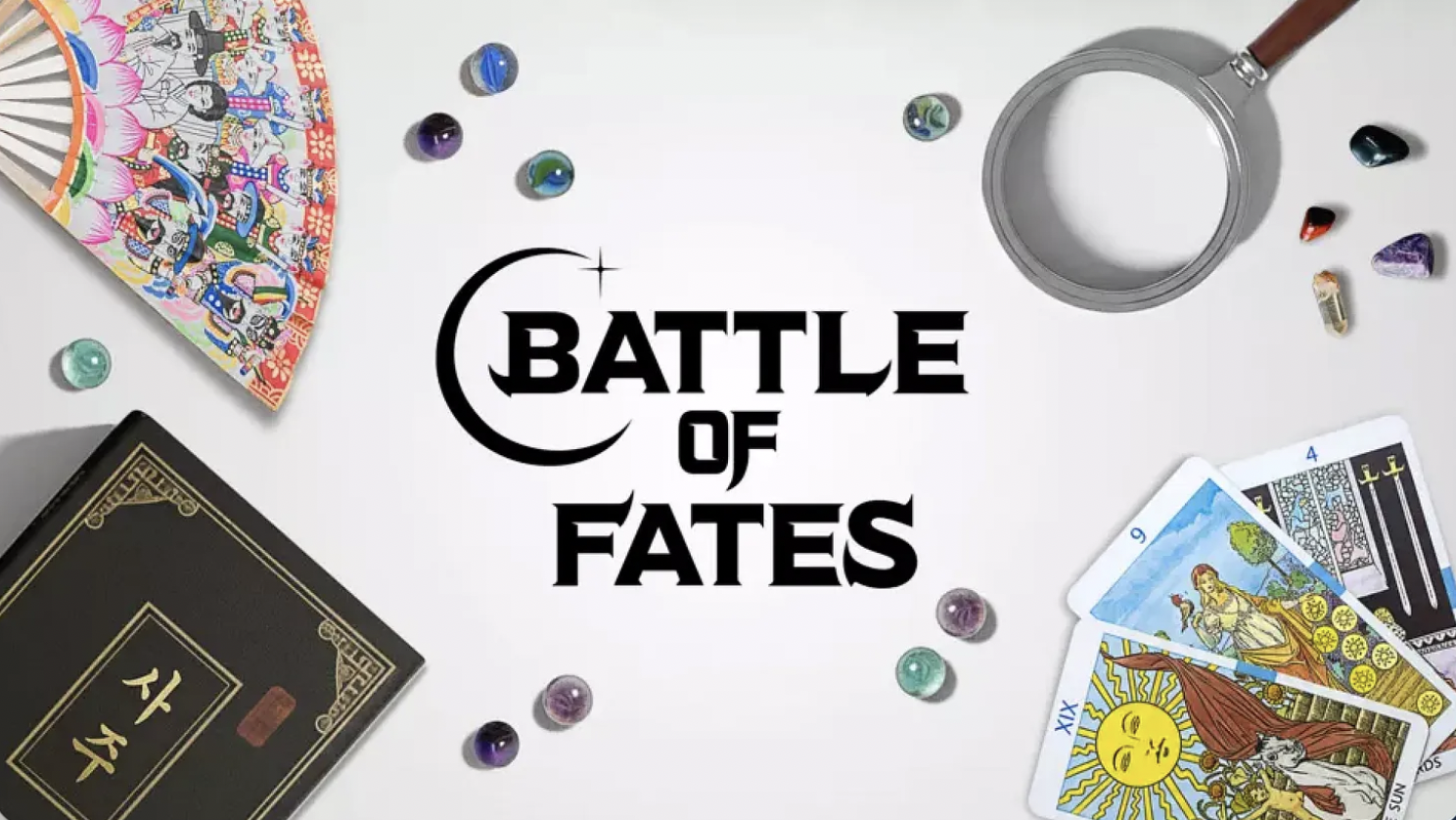
If you haven’t watched it yet: Korea’s top 49 “Fate Readers” (what I would call intuitives) put their intuitive skills to the test in a groundbreaking and insanely entertaining competition that makes us all question whether fate can truly be read. The practitioners competing include shamans (known locally as mudang and what would be considered a medium or psychic in western culture), tarot readers, physiognomists, and saju and myungri scholars. For me, it was an educational spiritual deep dive. I want to learn about all the things they are doing and what modalities we are either missing out on or even dismissing in mainstream western spiritual practices.
Similar to my feelings about the Telepathy Tapes when they first came out, this is a show I can’t stop thinking or talking about because it is again something that is so quickly and easily dismissed by many, but has still found its way into a global conversation about intuitive abilities and spiritual beliefs.
Like all things that push the boundaries of what many consider acceptable, this show has not been without controversy. But the conversation it’s starting about intuition, culture, and how we navigate what can’t be seen, I think we should be having.
The Tools Are Different. The Work Is the Same.
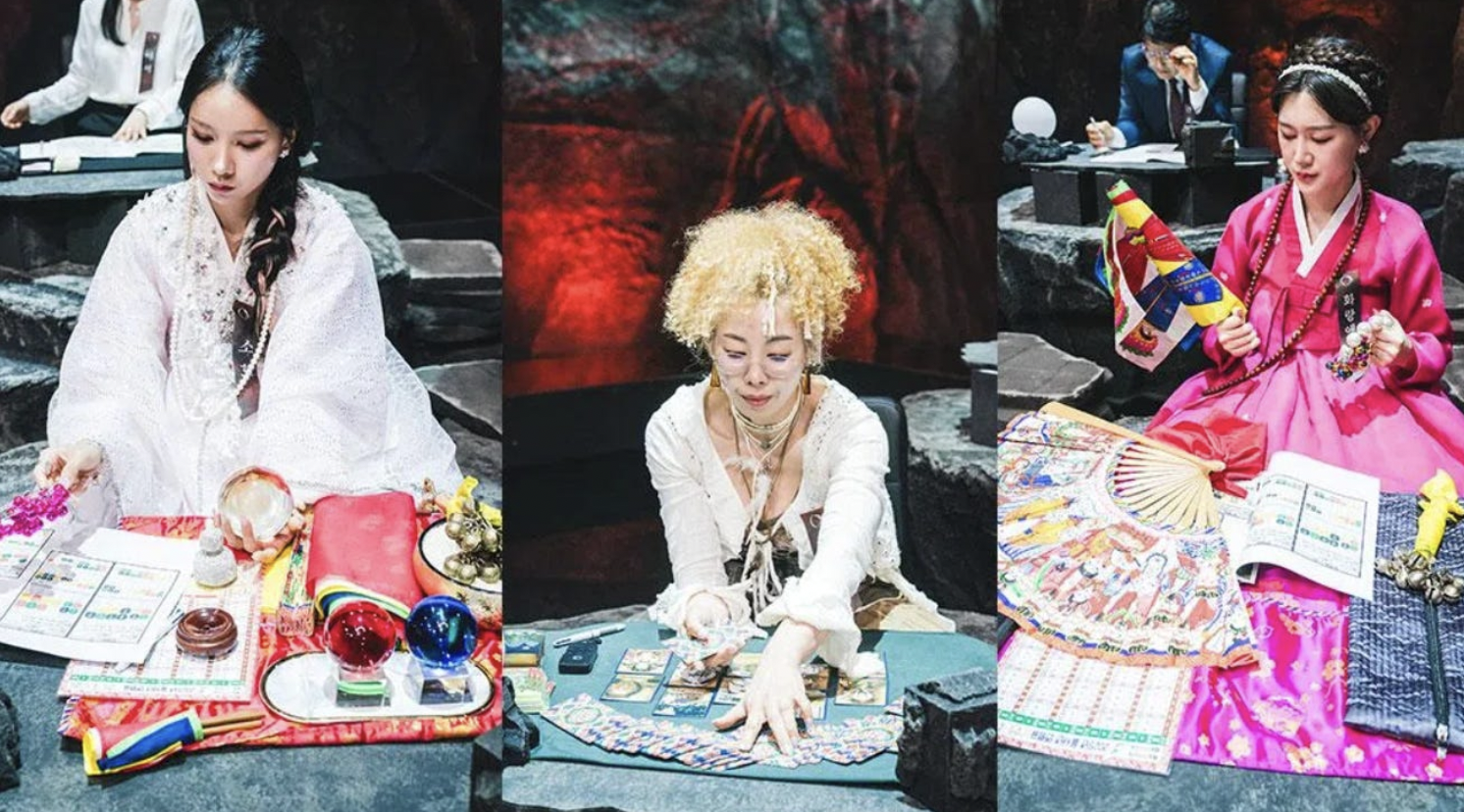
In the US, we talk to our guides. In Korea, they are guided by their deities. In the US, intuitives use cards, pendulums, breath, and body. On Battle of Fates, we also see flags, bells, elements, birth charts, and names.
Each practitioner is fluent in their own language of knowing using their own tools and techniques. Several rely on passed down ancient practices while others are creating new modalities and tools leaning into modern devices and technology to support their readings.
I often talk about how there is no wrong way to read. There is just YOUR way. And this show is the perfect example of that. No one way is right. But watching them side by side is a revelation.
Meet the Chief Spiritual Officers
What I obviously loved most was how many of these practitioners are clearly Chief Spiritual Officers. They lead with their intuition while influencing and working at the highest levels in the corporate world.
A few who stood out:
Young Master Byeon is a 15-year shaman with high-profile clients, including entertainment agency heads and well known actors.
Business Sage Kim is a corporate department head by day and a fortune teller by night (like so many of the people I know!). He’s done readings for over 6,000 startup founders and professionals.
Meta Myungri Joon holds an International Business degree from Washington D.C. and has been practicing myungri for 15 years. The fact that his practice bridges West and East is exactly the kind of crossover the world will be seeing more of.
Sage Cheonmyeong completed a PhD at KAIST (Korea Advanced Institute of Science and Technology, a top-tier public research university in South Korea) before becoming a shaman.
These are not people who choose between ambition and alignment, but intentionally integrate both seamlessly. This is the future I can’t wait to see more of.
Lee Sobin was the final contestant to enter, and arguably one of the most intimidating to her competitors. She began as a child shaman at the age of seven, appeared on TV at nine, and now runs a shrine in Ansan at 26. I cannot speak highly enough about how Lee conducted herself on this show. She carried authority without arrogance. She always kept her “clients” needs in mind and had integrity with her readings and her practice that included clear boundaries about what and who she would read and when.
One of the worst parts about being an intuitive is when people want to treat you like a Magic 8 ball — giving them the answers they really need to figure out on their own. Lee doesn’t do this and neither do I.
Reading Each Other
In the US, intuitives love to read each other. In Korea, it’s considered taboo.
So when the show put the contestants in a position where they had to read one another the tone of the readers changed. They got vulnerable and real. They connected in a way that none of them had before — not because of the competition, but because they were finally in a room with people who truly understood what it’s like to live this way. Anyone who leans into their spiritual abilities knows this moment. When you simply need to talk to someone else who is experiencing the same thing as you so you don’t feel insane or worse, alone.
A Different Relationship With the Dead
One more cultural observation I can’t stop thinking about is the stark difference in how eastern and western intuitives communicate with the dead. Mediumship in the US often looks and feels like a conversation that is warm, intimate, almost casual (think The Long Island Medium, Theresa Caputo or Tyler Henry). In Korea, it’s closer to a rite. In the “Battle of Souls,” they console those who have passed and the grieving in a way that feels ceremonial, but also to me was the only part in the show that felt performative. This is not to say that it is, but I do think it’s part of the show many skeptics will question.
Neither is more valid. But I do think they carry different assumptions about what the dead are owed and what the living need.
What This Has to Do With You
Watching this show was like an episodic test of my own intuitive abilities. Every round, I found myself answering the same questions the contestants were asked and seeing how I did (not gonna lie, I did pretty well!).
Because here’s what I believe and why I keep coming back to this idea of the Chief Spiritual Officer. You are your own Chief Spiritual Officer. Not because someone gave you the title, but because you live it.
Your practice might be breathwork, tarot, astrology, intuitive writing… honestly, it can be anything. But I truly believe that we all have some sort of intuitive skill should we choose to lean into it. My only goal is to destigmatize what this means in the corporate world and how we embrace it all as a super power and see it as something that makes you more connected to the people around you and the work (both professional and personal) we are all doing.
Battle of Fates is just another reminder that this isn’t new. Across cultures and across centuries, humans have always needed people who help them navigate what can’t be seen. If you’re one of those people I can’t wait to meet you.
Battle of Fates is streaming on Disney+ (and Hulu in the US). If you watch it, come back and tell me what you think. I’m dying to discuss this with anyone and everyone.